
Play is an essential part of learning communication, turn-taking, and shared attention. While some children naturally enjoy playing alone, others may avoid or struggle with social play for reasons that extend beyond personality. In other words, not all solitary play is a reason for concern, but sometimes it can signal a deeper issue.
Knowing the difference between a quiet, independent temperament and potential developmental challenges can help parents better support their children. Parents who observe their children’s behavioral patterns can learn to recognize when independence becomes isolation. Awareness of early social milestones can help families identify when evaluation may be helpful or clinically appropriate for supporting a child’s developmental needs.
The Purpose of Play in Childhood
Play is the foundation of childhood learning and development; it supports motor, cognitive, emotional, and social growth in interconnected ways.
- Through movement-based activities, children build strength, coordination, proprioception, and fine and gross motor skills that support everyday functioning.
- Children strengthen their cognitive development as they experiment, solve problems, and experience cause-and-effect.
- Children learn social skills, such as sharing, turn-taking, negotiation, and empathy.
- Children develop emotionally as they express their feelings, practice emotional regulation, and build resilience through cooperative and independent play experiences.
Across all of its forms, play encourages curiosity, creativity, and flexible thinking, laying the groundwork for academic learning and real-world problem-solving later in life.
Independence vs. Isolation
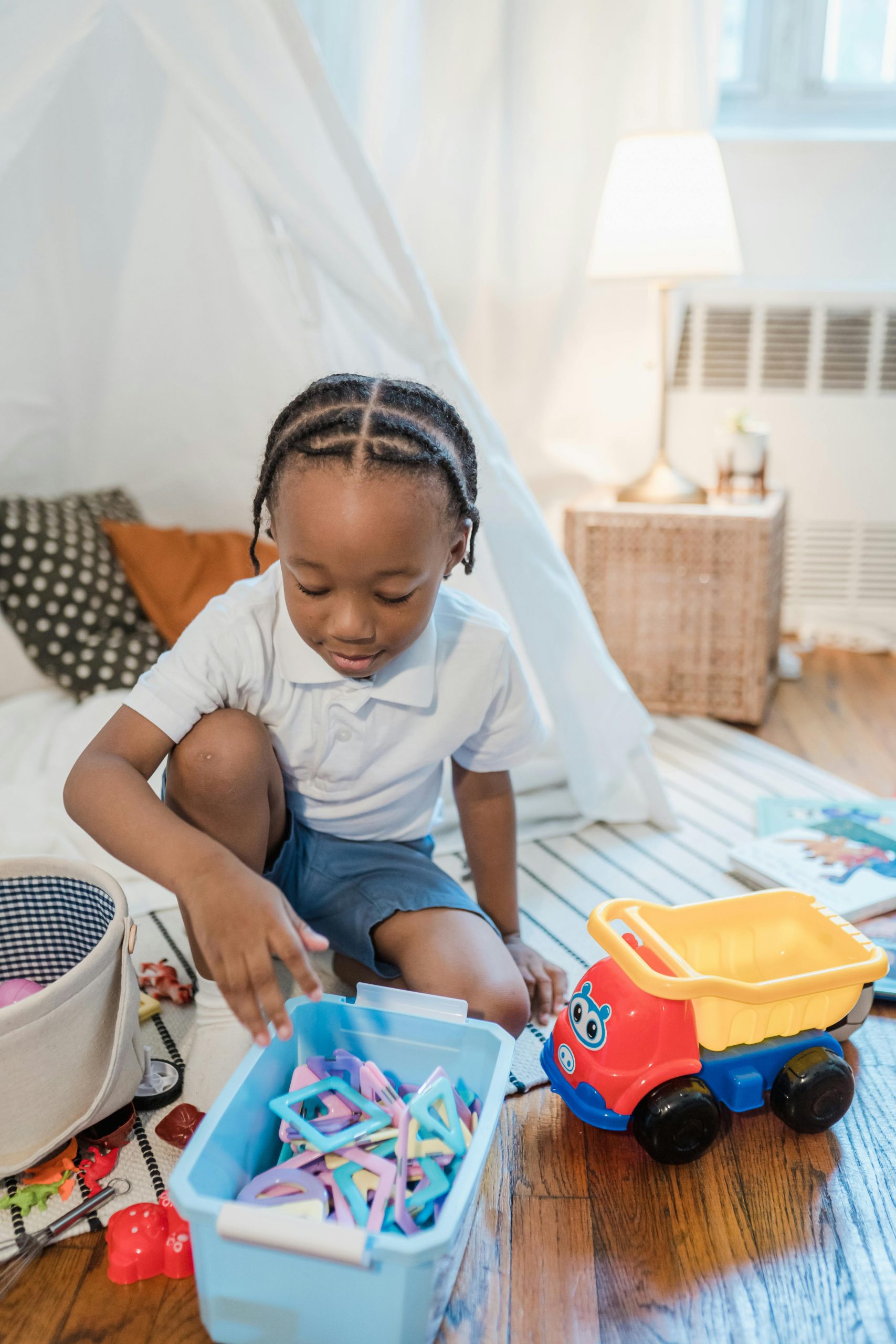
Independent play is a valuable part of childhood development because it allows children to explore their interests, build confidence, and develop creativity at their own pace. When children play alone by choice, they often practice problem-solving and self-direction, which support healthy cognitive and emotional growth.
However, cooperative play is equally important. Through interacting with others, children learn how to communicate effectively, interpret social cues, take turns, negotiate, and collaborate. These shared experiences help build the foundation for complex relationships and social understanding.
Together, independent and cooperative play create a balanced developmental experience that supports both self-reliance and social connection.
Social Milestones: Tracking Childhood Development Through Play
Play offers important insight into a child’s social development, with key milestones emerging over time. In Mildred Parten Newhall’s six stages of play theory, children progress through six developmental play stages: unoccupied, solitary, onlooker, parallel, associative, and cooperative.
As children develop, they progress from parallel play (i.e., playing near others without direct interaction) to associative play (i.e., playing near and showing interest in others’ activities, offering toys, and imitating actions). Finally, they progress to the cooperative play stage, in which children take turns, assign roles, and collaborate in imaginative activities.
Defining the Concern: When Independence Is Actually Isolation
Some children prefer solitary play, but a persistent lack of interest in engaging with others could indicate a developmental concern rather than simple independence. A child might be isolated if they:
- Consistently avoid peers
- Do not respond when approached during play
- Show little interest in shared activities
- Struggle to initiate back-and-forth interaction
- Avoid making eye contact
- Do not point to or show objects
- Prefer repetitive, solitary routines
These patterns, especially when consistent over time, may suggest a need for further developmental evaluation. Early identification can help determine whether additional assessment or support, such as a structured play group, would be appropriate or beneficial for the child.
Is Your Child Independent or Isolated? Professional Guidance and Support
The sooner your child completes an evaluation for developmental concerns, the sooner they will receive care to support healthy development as they grow.
If you have any concerns about your child’s developmental progress or notice that your child consistently avoids interaction, shows limited communication, misses social milestones, or struggles with back-and-forth play (despite opportunities and supportive environments), our experts at ICG encourage you to seek professional guidance, starting with your child’s pediatrician.
If you would like an evaluation for your child from an ICG behavioral health professional, the first step is obtaining a referral from your pediatrician. Once you have a pediatrician’s referral, please contact us to schedule an evaluation.